

Dexway English Magazine: A2 – Edition 1

What is your favourite hobby?
I am a rock climber and I love it. It is great exercise and it is really good fun. The best places to go climbing are also usually incredibly beautiful: mountains, sea cliffs and sandstone forests. In London there are not very many mountains so I climb at a climbing centre, it is not quite as beautiful as Yosemite Valley in California, but it is a good place to train and improve my finger strength. One great aspect of climbing is that there is virtually no competitive element, I am not trying to beat an opponent; I am trying to use my own strength to conquer a piece of rock.
I often climb with people that climb much better than me and also with beginners who are just starting and there is no problem, we all just try to enjoy the climbing.
I’ve never heard anybody say “ha ha! I can climb that and you can’t!” It’s just not the way climbers think and act. We all try to be good friends and enjoy the rock together. What is your favourite hobby and why?

David Attenborough
THE GREATEST BROADCASTER OF OUR TIME
Sir David Attenborough has been a Naturalist, a presenter of nature programs and author for more than 60 years. He is considered a national treasure in Britain, and is also listed as one of the 100 greatest Britons of all time. He studied Natural Sciences at Cambridge University and started working for the BBC in 1952.
He is widely respected for his contributions to natural history and to documentary film making. He wrote and presented the Life series for BBC starting with “Life on Earth” and he contributed to the production of many more television programmes. “Frozen Planet” is all about the icy regions of our planet and every shot is breathtaking, although it did cause some controversy with some footage of a polar bear with very young cubs which was filmed in a zoo. It is clear that it is almost impossible to film a polar bear giving birth in the wild.
Many people in Britain owe their knowledge about wildlife to David Attenborough’s television broadcasts. Because of his work educating people about nature, he was Knighted in 1985 by The Queen of England and has won many awards. He is passionate about animals and saving the environment. Quote “The future of life on earth depends on our ability to take action.”
Lions
THE KING OF THE (CONCRETE) JUNGLE
Trafalgar Square is one of London’s most iconic landmarks. In the middle of the square is Nelson’s Column, the monument to commemorate Admiral Horatio Nelson’s victory at the battle of Trafalgar (1805). There are four bronze lions that are considered Nelson’s protectors, but why lions? They are not native to Britain. Maybe four protective badgers or four foxes are a better idea.
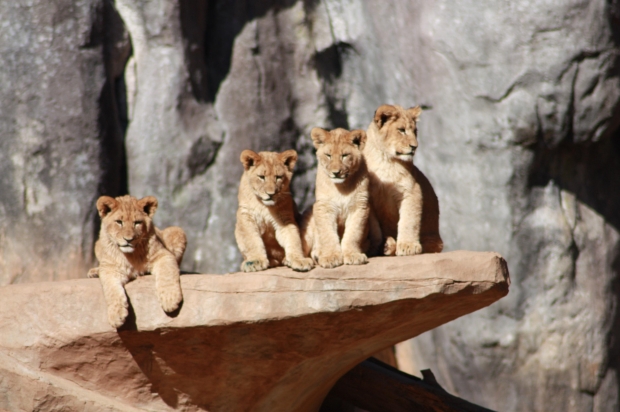
Lions are part of many countries histories around the world even though lions are only found in Africa and a handful of Asiatic lions exist in the Gir Forest in India. Any lion found outside of these two places is more than likely in a zoo. Let’s hope it’s in a zoo anyway!
Lions represent courage, strength and nobility they have been used symbolically for thousands of years and by many different cultures. There are cave paintings of lions found in the Lascaux Caves in France which are thought to be around 17,000 (seventeen thousand) years old, when lions lived in Europe. A lion is also used on the British Royal Coat of Arms. The king of the beasts as a symbolic icon of the royal family might seem like a good idea but biologists and naturalists are carrying out research that shows that lions often scavenge their food, stealing food from other wild cats, taking food from wild dogs and hyenas, and eating carrion, which is not the behaviour for the king of the beasts.
Maybe as our understanding of the natural world grows, our use of natural images in cultural iconography will change, but it takes a long time to study the behaviour and characteristics of wild animals and it takes even longer for cultural icons to be established.
Can you think of any interesting cultural icons?
Easter
CHOCOLATE EGGS
Easter is primarily a religious holiday but the way we celebrate it can very different. It has always been a time of celebration and feasting.
Many games and customs have developed such as egg decorating, egg races (running with an egg on a spoon), and looking for hidden eggs left by the Easter bunny. Nowadays, it is more of a commercial holiday selling greeting cards, chocolate Easter eggs, marshmallow bunnies, jelly beans and other candy. Easter is celebrated in many different countries of the world.
In Germany, decorated eggs and wooden eggs are hung on tree branches. In Croatia and Slovenia, a basket of food is prepared with ham, colored eggs, bread and cake and is brought to church to be blessed.
In Finland, Sweden and Denmark it is tradition for small children to dress as witches collecting candy door-to-door (much like Halloween in America).
In the UK and USA, people attend church, children paint eggs, go searching for hidden eggs and wait for the Easter bunny to bring them candy and small toys in a basket.
No matter how you celebrate, it is always about eating food, spending time with family and celebration. How do you celebrate Easter?
Great Barrier Reef
VISIT THE LAND DOWN UNDER
The Great Barrier Reef is home to a large variety of sea life including some endangered species. Thirty species of whale and dolphin have been found here including the well-known humpback whale. More than 1,500 (one thousand five hundred) type of fish call it home and it is known for six types of sea turtles who go to the reef to breed. It is the largest coral reef system on Earth with 2,900 (two thousand nine hundred) reefs and 900 (nine hundred) islands stretching 2,600 (two thousand six hundred) kilometers. It is located in the Coral Sea, off the coast of Queensland in Australia.
The reef is a very popular tourist destination especially with scuba divers. There are many different boat tours offered to see the sea life. The most popular activity on the reef is snorkeling and scuba diving.
The fishing industry in the reef is largely for commercial boats, but also for fun and of course to eat. As with all marine life, overfishing has been a problem as well as pollution and declining water quality. One really neat fact is astronauts can see the reef from space!
Australia is an English speaking country but its name is Latin for southern. There are approximately 2 million visitors every year who enjoy the magic of wonderful of this beautiful place. What marine life would you most like to see?
Titanic
THE UNSINKABLE SHIP
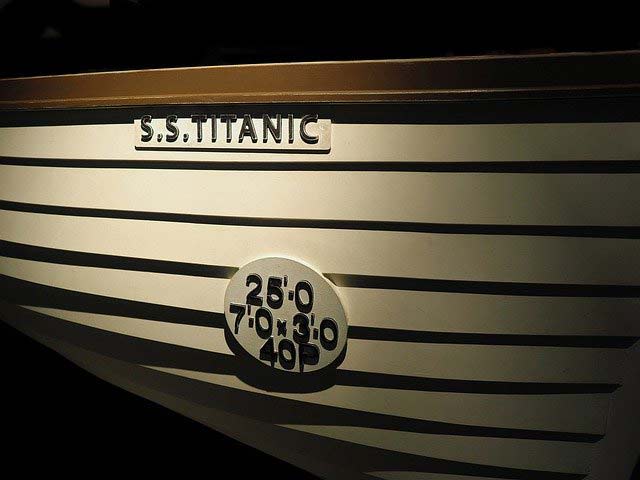
The RMS Titanic was the largest of 3 ships made by the company White Star Line. The other two were named Olympic and Britannic. It was 268 (two hundred and sixty eight) meters long, 28 meters wide and weighed 45,000 (forty five thousand) tons. It could travel at a speed of 24 knots (approximately 40 km/ hour).
The owners thought if the ships were big and very expensive people would prefer this method of travel. The boat was said to be the most comfortable and luxurious boat ever. It had an on-board gym, swimming pool, libraries, high-class restaurant and beautiful cabins for the rich. On her first voyage, April 10 1912 (nineteen twelve), 2,224 (two thousand and twenty four) passengers and crew going from Southampton, UK to New York City, USA. The ship was commanded by Edward Smith and carried some of the wealthiest people in the world and hundreds of immigrants.
Four days after leaving the UK and about 600 (six hundred) km from Newfoundland in Canada, it hit an iceberg at 11:40 pm. Due to outdated sea safety regulations; there were lifeboats for only one third of the people aboard. By 2:20 am the boat broke apart and sank. Two hours after many people were lost to the sea, a ship came and rescued about 705 (seven hundred and five) survivors.
Even 100 years after the sinking of the Titanic, it plays an important role in popular culture. The wreck was found in 1985, thousands of artifacts have been put on display in museums around the world. It is one of the most remembered and talked about ships in history in books, folk songs, exhibits and films.
Why do you think it has captured so many people´s hearts?