



Dexway English Magazine: C1 – Edition 5

Reverse Alarm clocks!
Sleep is made up of 2 main stages and 3 sub stages. In order to get a good night of sleep we need to go through all the stages, this normally takes us 90 minutes to pass through the 2 main stages and 3 sub-stages. These 90 minutes cycle will continue until we wake refreshed and ready for the day ahead. If we wake between stages we are left with the “morning after the night before” feelng.
Help is at hand, there is a tool in the fight against bad nights takes the 90 minute cycle into consideration and rather than waking you up, they actually tell you what time you should go to bed to make the most of these 90 minute cycles.
For example if I get up at 7.30am the reverse alarm clock suggests going to bed which means actually going to sleep not reading a book for an hour at 10.16pm, 11.46pm, 1.16am or 2.45am this would then give me enough time to travel through the “land of nod” and wake up refreshed.
You can try the reverse clock here. Please let me know if it works. I´m interested to know if going to bed at 2.45am and waking at 7.30am leaves a person refreshed and ready for the day or ready to go back to bed!
Fracking
HYDRAULIC FRACTURING
Fracking or hydraulic fracturing is a manufacturing process used to release hydro-carbons such as gas or petrol from the surrounding rock layer.
A hole is drilled, called a bore hole and a liquid often called a slurry which a mixture of various highly dangerous and corrosive chemicals mixed with sand is pumped into the bore hole through a sealed ´cap´.
The outwards pressure of the liquid, pumped into the bore-hole under pressure will attempt to spread sideways, this pressure of this escape is used to fracture or break the rock.
The aim is only to produce cracks within the rock, this cracks however quickly fill with the liquid to be collected.
Fracking was first used, unsuccessfully in 1947, the second successful use of fracking to simulate wells was in 1949, this test was successful and fracking has now been used to re-activate nearly a million oil and gas wells.
From an economical stand-point there are many benefits, fracking allows companies to only drill one bore-hole before the companies had to drill many holes across the reservoir.
Urban Myths
Urban myths are an updated version of traditional folklore. We have all heard stories of monsters hiding under our beds or the tooth-fairy that gives us a gift, these are folklore stories passed from generation to generation and urban myths are the same, urban myths move faster because they spread over the internet and are found in films and even e-mail warnings. Very often they are not real and have no evidence. In this article I would like to tell you about three such urban myths.
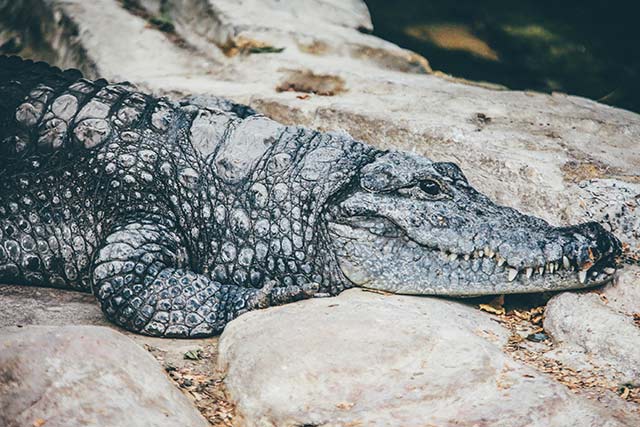
The Sewer Alligator, the myth says that people brought Alligators from Florida to New York as pets, but they quickly became too big and they were released into the New York sewer system. The myth says that there are so many Alligators that the police go into the sewers to hurt them. Of course the myth is not true and yes, there are stories of animals escaping from zoos and living in the New York Sewer system, but they are not Alligators.
Have you heard of the The Good Samaritan, another urban myth with a slightly happier ending? You are driving on a deserted country road when you see a car parked on the side of the road with a flat tyre. The driver flags you down and asks for your help. So being the good Samaritan, you get out of your car, go and get your tyre iron and jack and change the stranger´s tyre. The stranger is so pleased, he gives you an envellope and inside the envellope is a check for 10,000 Euros sign by Donald Trump. Are you more likely to help somebody because they might give you a reward?
The Kidney Heist, here is an urban myth that everybody has heard off. You go out for a drink, somebody in the bar starts talking to you, they buy you a drink and as soon as you have started your drink you begin to feel unwell. The next thing you know; you wake up in a bath full of ice in a hotel room with a message saying “Call the Emergency Services now; we have take one of your kidneys. This urban myth has made the plot of several movies which just highlights how fast and far these stories travel. Of course it is not true and the UK transplant service has even opened a special phone number to report this type of crime. Nobody has ever rung it.
Super Storm Sandy
STORMY TIMES
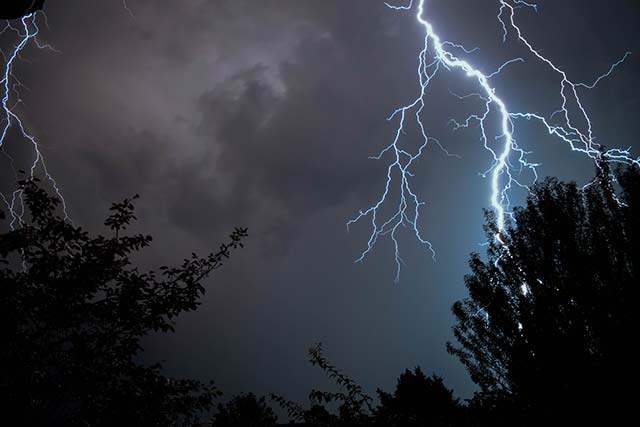
Superstorm Sandy, which was the second most costly tropical storm in U.S. history after Hurricane Katrina, attributed to at least 285 deaths across seven countries affected by the storm. Islands in the Caribbean, Jamaica, Haiti, Dominican Republic, Cuba, Canada, and the U.S. (24 states in total were hit by the storm!) were all affected in varying degrees. The storm began on October 22 and seemed to dissipate by October 31, 2012.
New Jersey Mayor Cory Booker urged residents without power to seek shelter or take precaution when using generators. Two women, aged 18 and 19 years old, died of carbon monoxide poisoning from using a portable generator. Many residents had no power as temperatures dropped in the Northeastern United States. Many citizens waited in long lines at the gas station to get gasoline for their generators.
Hurricane Sandy is estimated to have cost insurance companies $20 million dollars for damaged homes and buildings, putting the damage the second worse only to Hurricane Katrina. Damage estimates are around $75 billion U.S., which is still less than Hurricane Katrina in 2008 at about $108 billion U.S. There was a national response to help people affected by the storm including telethons and media campaigns. There was much debate sparked by scientists who say warming of oceans are intensifying these storms to devastating levels. Rising sea levels are worsening coastal effects. President Obama held a news conference on November 14 as was quoted as saying “… we can’t attribute any particular weather event to climate change. What we do know is the temperature around the globe is increasing faster than was predicted even 10 years ago. “
What can people do to prepare for such a storm? Do you think Hollywood’s actors and actresses should make a relief fund to raise money and help the people affected by the storm? What can cities near the ocean do to try to prevent their homes from being swept away by the ocean in a big storm? Should it be impossible to insure a home near the ocean? Who should teach people proper use of generators or other life-saving instruments?.
Midlife crisis
MID + LIFE + CRISIS
Scientists need to find boxes for everything and everyone. In this article I would like to explain and define some of the issues related to a midlife crisis. Midlife crisis is one of the 8 stages of human development as suggested by Erik Erikson, he called it Generativity vs. Stagnation and suggested that it might occur in what he calls middle adulthood from 25-64. A midlife crisis is typically experienced between the ages of 40 to 55.
Erikson states a central question to be answered at this stage in our lifes, that is “Can I Make My Life Count?” He says that at this stage in our life we take the role of guiding the next generation or working to better the society that we live in we work towards productivity and accomplishment at this stage of our lives and if we cant reach this high level of productivity or can not gain a sense of accomplishment from the interactions then we enter into a period of stagnation, neither moving backwards or forwards in our life and this is when we need to make changes in our life.
Some “symptoms” of a midlife crisis are a general feeling of unhappiness with life and the life style that we have, boredom with the people and things around us and questioning the choices that we have made in our lives to date – this can also include regrets about the choices we didn’t make.
The Golden Ratio
GOLDEN
Many scientists and artists have worked with the rectangle known as the “golden mean” or “golden ratio.” This particular number (1.6180339887…) can be linked to aesthetic ideas of beauty and can even be found in nature. While it is impossible to attach exact numbers to music, architecture, plants, human faces, galaxies, etc…many shapes bear a strong resemblance to this shape created by using this number.
For centuries, scholars, scientists, and artists alike have argued over the significance of this number. Some believe that it could be possible to reduce everything we see and experience to numbers like this, while others only see weak connections at best. Would it be possible to have a number or equation that explains every relationship we see in nature? If this were true, then such a mathematic equation would allow someone to predict anything at all: weather, stock prices, life, love, etc. While this idea can quickly turn into a discussion about having “free will” to do the things we want, a more interesting approach is to examine the beauty of some of the fractal and organic images created using this number:
Galaxies, plants, and buildings share this shape. Many things we don’t even realize will mimic this spiral or the rectangles that create it. Is it possible that this “golden ratio” is significant? Or are people looking for meaning where there is none?
